
Mathematical symbols are signs used to convey meaning between numbers, operations, and relationships quickly and universally. Many concepts, from basic operations such as addition, subtraction, multiplication, and division to expressions denoting equality, inequality, and ratios, are represented through these symbols. This allows complex mathematical ideas to be expressed concisely and clearly without the need for lengthy explanations. The fact that mathematical symbols form a common language ensures that students and scientists from different countries understand the same expression in the same way.
Mathematical symbols play a fundamental role not only in school lessons but also in many fields such as science, engineering, economics, and technology. Formulas, graphs, and equations acquire a standard structure and become easier to interpret thanks to these symbols. Symbols used in advanced mathematics, such as integrals, derivatives, and limits, are representations that facilitate the understanding of abstract concepts. Learning these symbols correctly develops mathematical thinking skills and helps establish connections between topics more easily. Knowing the meaning of symbols allows one to go beyond result-oriented progress and grasp the solution process.
Mathematical Symbols and Their Meanings
Mathematical symbols and their meanings are of fundamental importance for the correct reading and interpretation of mathematical expressions. Each symbol represents a specific operation, relationship, or concept, and this representation ensures that mathematics is a universal language. When numbers alone are not sufficient, symbols come into play, clearly showing how operations are performed and how numbers are related to each other. This prevents confusion, especially in problem-solving processes, and enables systematic progress.
Knowing the meaning of symbols used in mathematics also develops mathematical thinking. An equals or greater than sign can convey the relationship between two expressions at a glance. Similarly, parentheses clarify which step to take first by determining the order of operations. When these symbols are read correctly, the solution can be reached without the need for lengthy explanations. For students, understanding the meanings of symbols transforms mathematics from rote memorization into a logic-based structure.
Mathematical symbols are also frequently used in everyday life. You may encounter the percent sign when shopping, the division symbol in time calculations, or the equals sign in measurements. This shows that symbols are not only for academic purposes but are functional in many aspects of life. Learning the meanings of mathematical symbols enables individuals to establish a more conscious relationship with numerical data.
The most commonly encountered mathematical symbols in daily use and their basic equivalents are as follows:
- The + sign indicates that an addition operation is being performed between numbers.
- The – symbol indicates that one value is subtracted from another.
- The × and symbols are used as different representations of multiplication.
- The ÷ symbol indicates that one number is divided by another.
- The = sign indicates that two mathematical expressions have the same value.
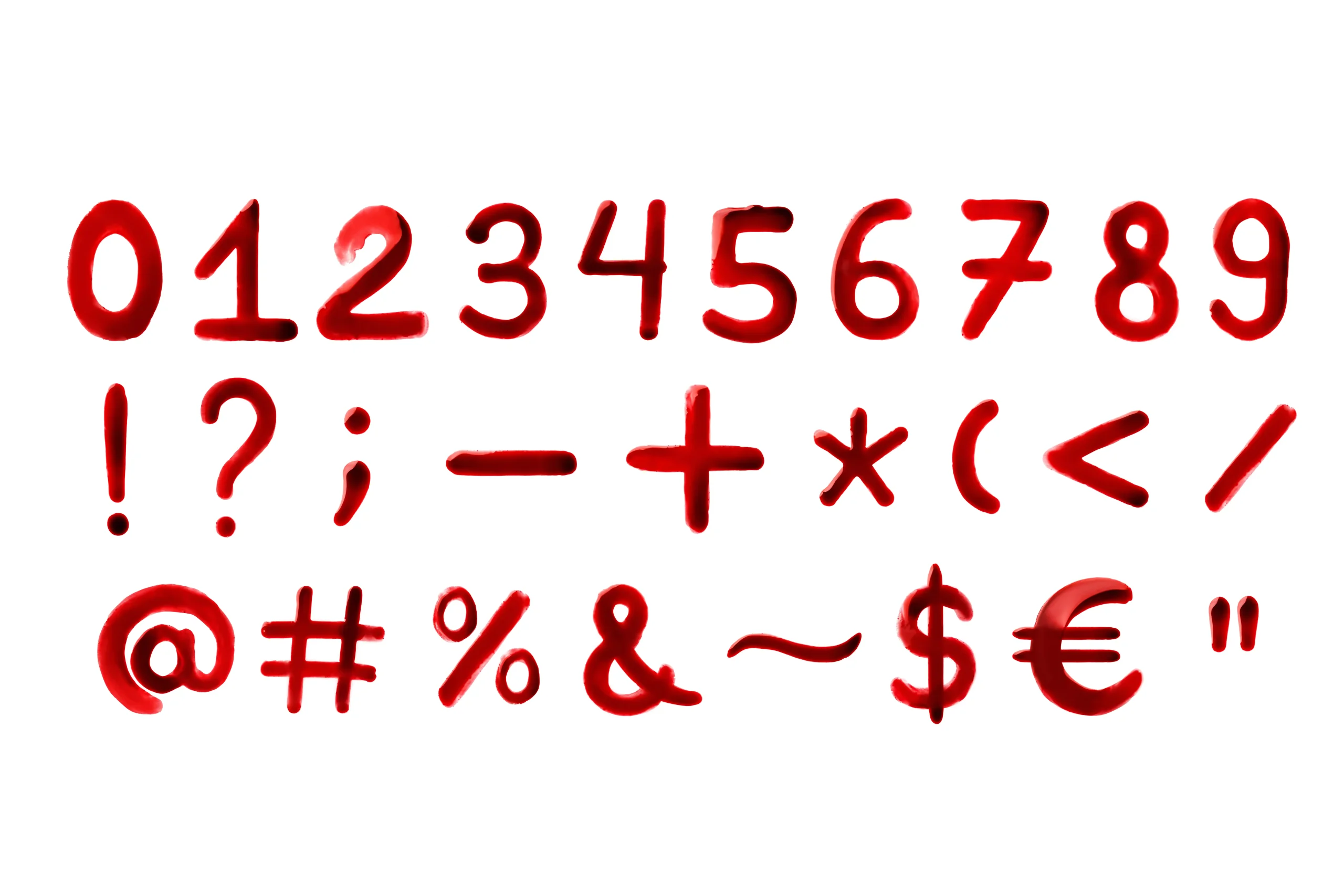
Names of Symbols Used in Mathematics
The names of symbols used in mathematics are important for the correct pronunciation and understanding of symbols. Knowing not only what a symbol means but also how it is named enhances mathematical communication. Using symbols with their correct names, especially in classroom settings or written explanations, prevents conceptual confusion.
Learning the names of symbols makes it much easier to read mathematical expressions aloud. For example, when reading an equation, symbol names such as “equals,” “plus,” and “minus” make the expression more understandable. This speeds up communication in both the teaching and learning processes and prevents misinterpretations.
Furthermore, students who know the names of symbols follow their steps more consciously when solving math problems. Learning the symbol-meaning-name triad together forms the basis of lasting learning in mathematics and prepares a solid foundation for advanced topics.