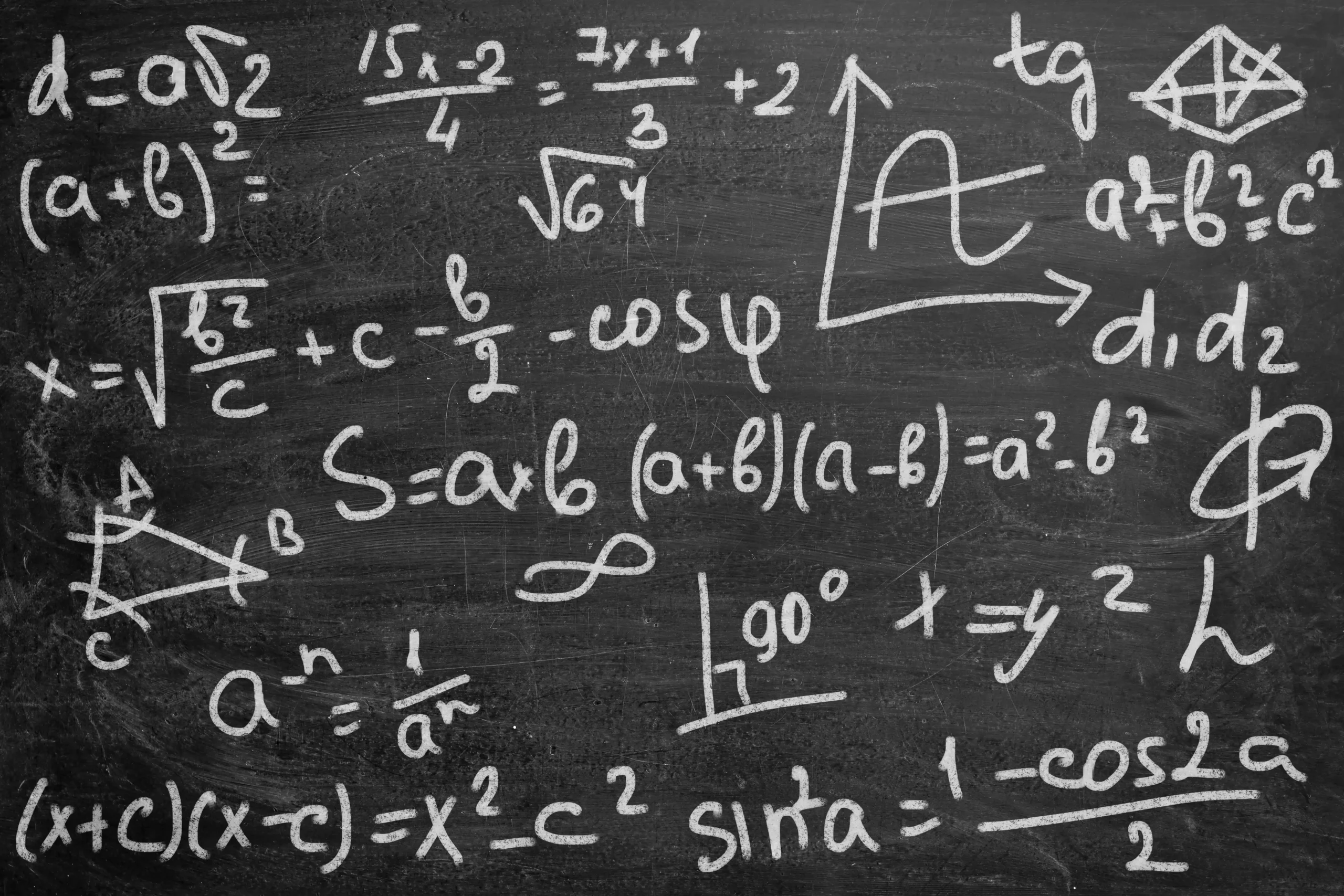
The world’s most difficult math problem, though it may appear to be a single “question statement,” often describes a family of problems: Some are the million-dollar Millennium Problems (e.g., the Riemann Hypothesis, the Navier–Stokes regularity problem), while others are classics that have puzzled mathematicians for years with the question “is there a solution or not?” (e.g., P vs NP). Therefore, the term “most difficult” is used for questions that have had the greatest impact, resisted solution for the longest time, and would change many fields if solved. Moreover, most are well-defined but deeply theoretical questions, rather than high school-style short calculation problems.
The world’s most difficult math problem is often not a riddle with a single answer; it is seen as a threshold that shapes the future of mathematics. Encountering such a problem aims to transform the way of thinking rather than reaching the correct answer. For mathematicians, these questions represent a long journey where patience and intuition work together. The methods developed in the process of finding the solution contribute as much to science as the solution itself, reminding us once again why mathematics is a universal language.
The World’s Toughest Question in Mathematics
In the world of mathematics, the phrase “the world’s hardest question” means much more than a single operation or a problem that can be solved in a short time. Such questions define the limits of mathematics and reveal the points where current knowledge is insufficient. Often, these problems involve not just numbers, but also logic, abstraction, proof methods, and theoretical frameworks. The definition of a mathematical problem as “difficult” is related not to its containing complex formulas, but rather to the inability to prove why it is correct or incorrect. Questions that remain unsolved for years, even centuries, therefore hold a special place in the history of mathematics.
The most important feature of these questions is that they affect not only mathematicians but also fields such as physics, computer science, and engineering. The solution to a mathematical problem can sometimes pave the way for technological developments and sometimes radically change scientific ways of thinking. Therefore, questions referred to as “the most difficult” represent humanity’s collective knowledge rather than an individual intelligence test. In mathematics, difficulty is often measured by patience and persistence.
To establish an appropriate framework, the common characteristics of these questions can be listed as follows:
- Remaining unsolved for many years
- Requiring comprehensive proof rather than a single correct answer
- They involve multiple branches of mathematics simultaneously
- Leading to the emergence of new problems when solved
With these characteristics, the most difficult questions in mathematics are considered intellectual challenges that test the limits of knowledge.
The World’s Most Difficult Math Problem and Its Solution
The point that usually attracts attention under the heading “the world’s most difficult math question and its answer” is that most of these questions do not yet have a definitive answer. There are some problems in mathematics that remain open problems because they cannot be clearly proven to be right or wrong. This does not mean that mathematics is incomplete or inadequate; on the contrary, it shows that it is a living and constantly evolving science. The absence of an answer to a question does not mean it is meaningless; on the contrary, it indicates that it is extremely profound.
In some cases, the “answer” is not a single conclusive statement, but rather a comprehensive proof that emerges after years of work. Sometimes, even when a problem is solved, the solution method is so complex that only experts in the field can understand it. Therefore, the concept of an answer in mathematics is quite different from the right-wrong perception in everyday life. What matters is not just reaching the result, but flawlessly demonstrating why that result is valid.
In this context, the answer to a mathematical problem can appear in the following forms:
- A definitively proven correct result
- A hypothesis that has been shown to be false
- An open problem that cannot yet be proven with current knowledge
- A structure requiring new theories for its solution
From this perspective, the answer to the world’s most difficult math problem is sometimes not a single-word result; it is a long thought process that permeates the entirety of mathematics. This is one of the most important characteristics that distinguishes mathematics from other disciplines.
The 7 Most Difficult Mathematical Problems in the World
Questions known as “the most difficult” in the history of mathematics are generally distinguished by their universal impact and their long-standing unsolved nature. These questions are addressed with the aim of expanding the boundaries of human knowledge. Some have been solved years later, while others remain among the greatest mysteries of the mathematical world. Such questions demonstrate that mathematics is not merely a school subject, but possesses a deep and philosophical dimension.
In this context, the difficult questions that are frequently mentioned and hold an important place in the history of mathematics can be broadly grouped under the following headings:
- Hypotheses regarding the distribution of prime numbers
- The efficiency of algorithms and computability problems
- Theoretical questions challenging the concepts of geometry and space
- Unsolvable structures related to fluid dynamics and motion equations
- Relationships predicted in number theory but not yet proven
- Assumptions thought to be valid in multidimensional spaces
- Abstract problems that question the foundations of mathematical structures
The common thread among these questions is that they affect not just one branch of mathematics, but many fields simultaneously. Each one, regardless of its solution, is an intellectual milestone that contributes to the world of thought.